
Why do we track microbial sources?
When a local beach is closed or a river is flagged for high bacteria levels, the immediate question is: where is it coming from? Traditional water quality testing identifies the presence of fecal indicator bacteria but cannot distinguish between a leaking sewer pipe, a nearby cattle farm, or a flock of geese living on the shore.
Microbial Source Tracking (MST) provides the specific data needed to move from “there is a problem” to “here is the solution.” By identifying the genetic signatures of specific hosts, land managers can take direct action, such as repairing infrastructure or managing local wildlife, rather than relying on guesswork.
Strategic data for environmental management
Effective monitoring is about more than just safety alerts; it’s about long-term watershed health. Using molecular methods as highlighted by the EPA’s technical resources, MST allows for:
- Smarter infrastructure spending: Ensuring tax dollars go toward fixing the actual source of human waste rather than unrelated runoff.
- Agricultural cooperation: Helping farmers implement the best management practices for livestock.
- Accurate risk assessment: Recognizing that human-derived waste often carries a higher risk of human pathogens than some animal sources.
Efficient testing with the Inland and Beach MST Panels
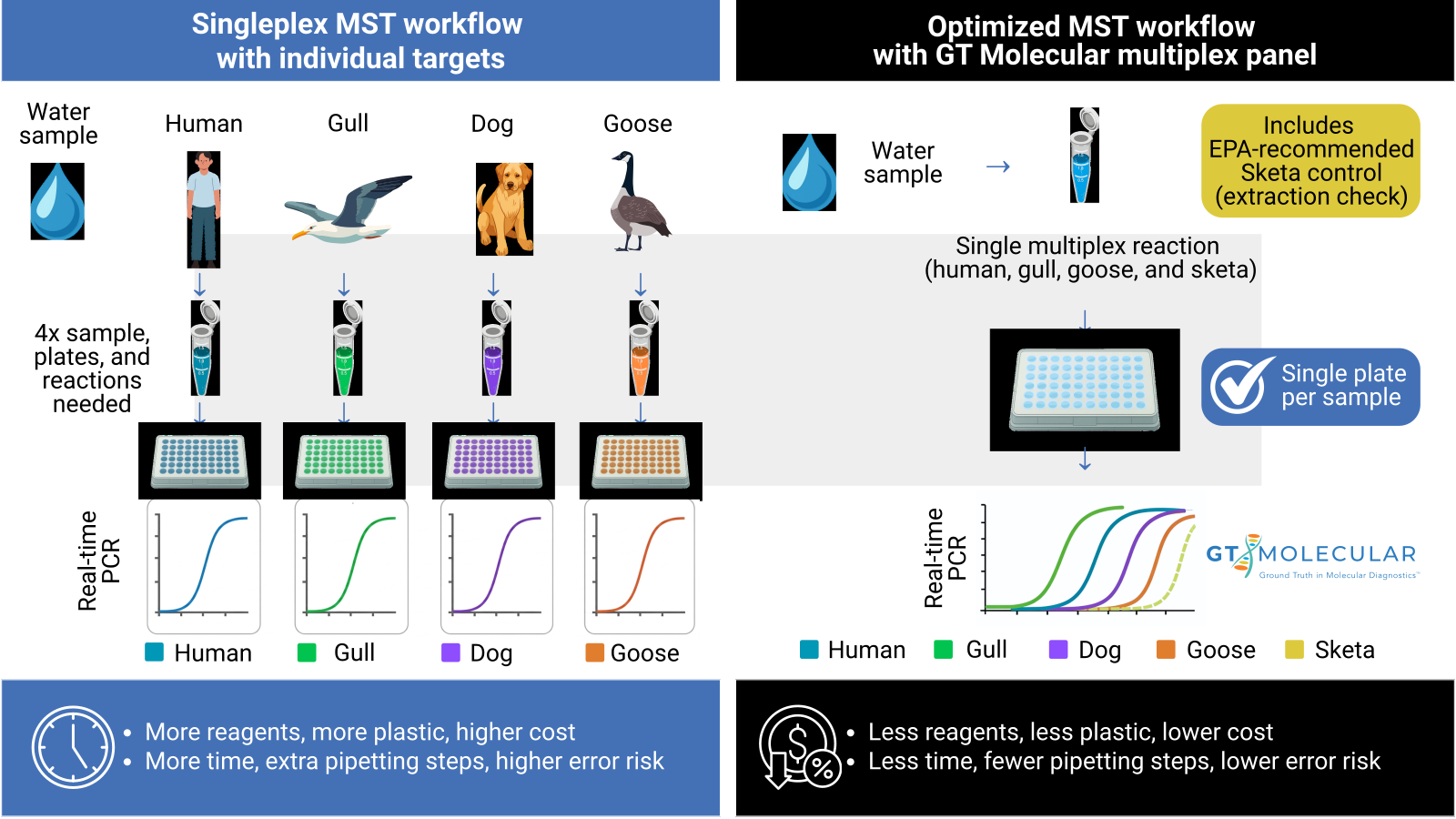
In the past, testing for four different animal sources required four separate PCR runs. This consumed valuable time and led to high reagent costs (Figure 1, left panel). Our new multiplexed panels change that by grouping the most common contaminants into single, streamlined reactions (Figure 1, right panel).
- GT Real-Time Microbial Source Tracking Beach Detection Panel Beach Panel: Designed for coastal and recreational areas, this single test detects markers for Human, Gull, Dog, and Goose.
- GT Real-Time Microbial Source Tracking Inland Detection Panel: Optimized for rivers and lakes, this test targets Human, Ruminant, Pig, and Dog.
By moving to multiplex PCR, labs can significantly increase their throughput, providing results to the public and policy-makers days faster than traditional culture-based methods.
Figure 1: Multiplex assays pinpoint the source with more efficient use of lab resources
Reliability through the Sketa control
One of the biggest challenges in environmental water testing is the presence of inhibitors, natural substances in the water that can interfere with a PCR reaction and cause a “false negative.”
To prevent this, both the Inland and Beach MST panels include Sketa (S. keta) as an internal positive extraction control. As recommended by the EPA’s recreational water criteria, this control ensures that the DNA/RNA was successfully extracted and that the assay worked perfectly. If you get a negative result for a human marker, the Sketa control gives you the confidence to know the water is truly clear of that contaminant.
Key resources for water managers
- EPA: Managing National Beach Quality
- CDC: Healthy Swimming and Recreational Water
- State Water Boards: MST Implementation
- GT Molecular: MST Testing Offerings
At GT Molecular, we aim to provide all the molecular biology tools you need for accurate microbial source tracking. We offer the kits mentioned above, but also digital PCR (dPCR) kits and services. Our dPCR kits have been shown to accurately quantify targets without the need for standard curves. Our services allow you to send us your environmental waters/extracts for testing. This option provides you with a much broader range of validated MST targets/species, which can be beneficial for one-time testing. If you will be testing large quantities of samples, please contact us for custom panel development for either qPCR or dPCR.